
Six Years of Hackathons (and a Few Lessons Along the Way)
My first hackathon as an organizer was back in 2020. It was called Sibiu Innovation Days, Lucian Blaga University was behind it, and I honestly had no idea what I was getting into. Since then we've changed the name (it's Open Your Mind Hackathon now), changed the format a couple of times and gone through a lot of different challenges. The basic idea stayed the same though. You get good people in a room, give them a problem that's worth their time, and then you mostly try to stay out of the way.
Somewhere along the way it stopped being "that event I help with" and became my way of giving something back to the tech scene here. I like introducing people who'd never have met otherwise. From the outside it probably looks like 24 hours of coffee and code. There's a lot more to it than that, and most of it you never see.
How it started
The idea behind Sibiu Innovation Days was pretty simple. ULBS wanted to bring students and people from the industry together and see if some of those rough ideas could turn into actual prototypes. I liked that a lot. People left their lectures and their office routine for a weekend and built things with people they'd met that morning.
We rebranded to Open Your Mind Hackathon in 2023. That first edition had 55 participants, 12 mentors, 10 volunteers and a jury of five. The theme was environmental education and sustainability, so the teams worked on local stuff: renewable energy, urban ecology, biodiversity. Not a big event by any means. But it showed us the format works and gave us a pretty clear idea of what to do next.
Every edition has been different. Sometimes the plan works. Sometimes it falls apart an hour before kickoff and you figure it out as you go (that happens more than I'd like to admit). As the coordinator I'm basically the guy keeping the structure, the partners, the mentors and the volunteers pointed in the same direction, so the people building things don't have to think about any of that. Most of that work is done weeks, sometimes months, before anyone shows up with a laptop.
The code is kind of the least important part
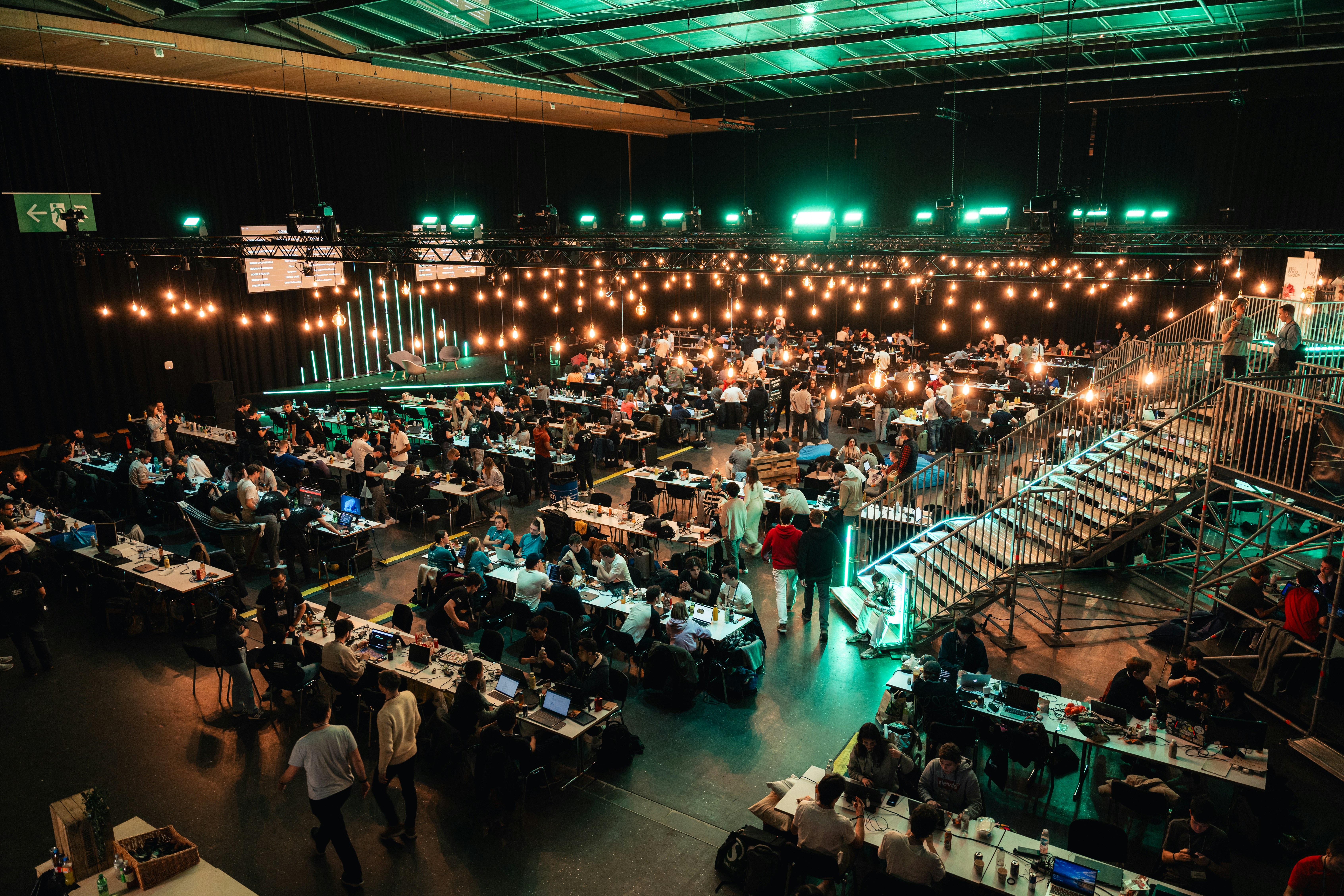
Yes, there's a lot of tech involved. There's also learning, a lot of teamwork and very little sleep, all crammed into one weekend. But after doing this for a while I'm pretty sure the code isn't what people remember. They remember the student who ended up on a team with a senior dev for the first time. Or the team that had a vague idea on Friday and a working demo on Saturday. Or the mentor who said one thing that saved them months of banging their heads against a wall.
For first-timers, this stuff is really valuable. You learn how to pitch an idea that isn't finished, how to split work when nobody really knows what they're doing yet, how to make decisions with the clock running, how to argue with your teammates and still be friends afterwards. And you find out pretty quickly that your first idea usually isn't the good one, and that nothing works on the first try. Nothing.
I've said this every year and I'll keep saying it: a hackathon shouldn't just be about winning. Prizes are nice and they get people motivated, no argument there. But the weekend should be worth it for the teams that don't win too. If you leave with a few new contacts and a bit more confidence than you came in with, that's a good weekend. I care about that more than the jury scores.
Innovation Week
One thing I like about sticking with the same project for years is that you get to change it, instead of running the same event on repeat. This year Open Your Mind is part of Innovation Week, with the Astra Hack edition on November 6–7 at the ASTRA Museum in Sibiu. We're adding AI and cybersecurity next to sustainability, and we're hoping to get people from a lot more backgrounds and industries this time.
The part I'm actually most excited about is the stuff that happens before the hackathon. If participants get some help upfront with figuring out the problem, validating it, prototyping and pitching, then the 24 hours become the end of a longer process instead of a one-off. Throwing people into a room for 24 hours is fun. Making sure they actually have what they need to use those hours well is harder, and I think it matters more. It also connects the university, local companies and the tech community a lot better than a single weekend ever could.
Sibiu Web Meetup
I also run Sibiu Web Meetup, which I started in 2018 (I wrote about how I organized the first one back then). I wanted a low-key place where people into web dev could meet and talk shop. If I'm being honest, I started it mostly for me. I wanted to meet people doing cool stuff and talk about something other than whatever was happening at work that week. Nobody else was doing it, so I did.
The first ones were small. Now there are hundreds of members, over 50 editions and a lot of speakers who've covered pretty much everything, from frontend frameworks and new tools to architecture, project management and the boring-but-real parts of the job. Along the way we teamed up with other local communities and conferences, got better at the online side and made it possible to join remotely too.
The format hasn't really changed. Find someone who knows their stuff, give them a stage, keep it free and leave enough time for people to hang around and talk afterwards. Anyone can come, students, juniors, seniors, doesn't matter. The one thing I've been stubborn about is keeping it about sharing knowledge. No recruiting, no sales pitches.
Running a community takes more work than people think. Speakers, venues, social media, the list goes on, and none of it is exciting. But then you see the same people coming back and bringing friends, or volunteers offering to help without being asked, or someone who sat in the audience a year ago giving a talk. That's what I'm after. I want it to belong to the people who show up, not to me. Once that happens, it'll keep going whether I'm there or not.
Things I've learned (so far)
A lot of this ended up sounding like software engineering, which I didn't expect.
- Plan, sure, but don't get attached to the plan. People won't follow your checklist and the event won't either.
- One great event doesn't build a community. Showing up regularly does, and so does giving people a reason to come back next month.
- A good venue and nice branding help. They don't fix boring talks or mentors who don't care.
- You don't need to know everything as an organizer. You need to know who to call.
- The small stuff matters way more than I thought. Replying to a message at midnight, thanking a speaker afterwards, saying hi to the person standing awkwardly by the door on their first visit.
- Don't wait for someone to give you permission. If the community you want isn't there, start it. Book a room, invite a few people and see what happens. It might take years and some months it'll feel like a second job. I still think it's worth it.
Still here
When I think back on all of it, from the first Sibiu Innovation Days to now, plus all the meetup editions since 2018, I don't really think about the spreadsheets. I think about the people.
The hackers who came back every single year. Mentors who gave up their weekends. Speakers who shared stuff they learned the hard way. Sponsors who trusted us, volunteers who kept things running when I was running around putting out fires. And a lot of hallway conversations that turned into friendships, side projects and even a few new jobs.
So thank you, really, to everyone who's been part of it. I might be the one coordinating, but none of this works without the people who show up.
Open Your Mind and Sibiu Web Meetup feel like two very different things to me. The hackathon is intense and fast, and the meetup is slower and steadier. I need both, and I think the local tech scene does too.
Six years in and I'm still doing it. If you want to join us at Astra Hack or drop by the next meetup, ping me on any of the usual channels. See you there!


